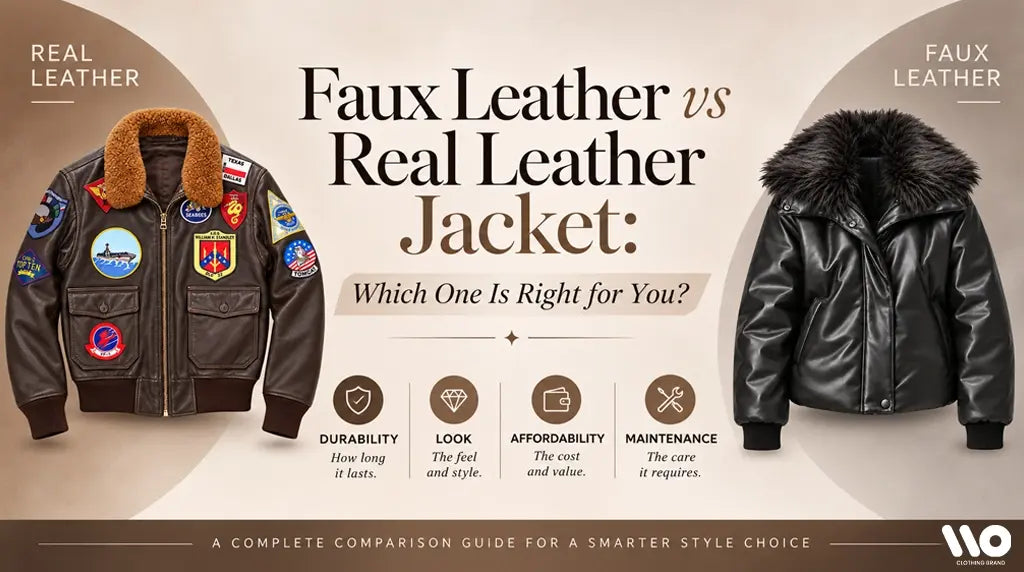


If you're buying a jacket in Pakistan, you're selecting a material first. Before spending a rupee many buyers compare a Real Leather vs Faux Leather Jacket. Both jackets look sharp on a hanger. So, in this guide we will talk about comfort, warmth, care plus cost. Then you can select the jacket that matches your budget and your winters.
The Quick Answer Before You Spend
Start with the short version. Faux leather costs less and looks neat when new. Real leather costs more but lasts far longer. In the real leather vs faux leather choice, time decides the winner. A cheap jacket that peels after one winter costs more than one good jacket you wear for years. So think about wear, not only the price tag.
What Faux Leather Really Is
Faux leather also goes by PU leather, vegan leather, or leatherette. Shops that list a faux leather jacket Pakistan buyers can afford usually use fabric coated with polyurethane. Makers press a grain pattern into that coating, so it repeats evenly across the jacket. Therefore, the surface looks neat but lacks the natural flaws of real hide. No animal hide goes into it.
Cheaper items may be made with PVC instead of PU. PVC is even less breathable and feels stiffer. Newer faux materials are blended with plant-based or recycled content and vary widely in quality. So judge each jacket by feel and what the maker says. Bonded leather is somewhere in the middle. Makers grind up leather scraps, glue them to a backing and coat the surface. It feels like a faux leather jacket.
What Counts as Real Leather
Real leather is animal hide that tanners treat so it stays flexible and resists rot. Sellers of a genuine leather jacket Pakistan buyers trust often use lambskin, goatskin, or cowhide. Lambskin feels soft and light. The goatskin is supple and pebbled in grain. Cowhide feels more firm and tough. Suede is considered real leather because makers brush up the inside of the hide to create a soft nap.
Look, Feel, and Smell: A Quick Touch Test
Sight gives the first clue. Many buyers weigh the Real Leather vs Faux Leather Jacket question by grain alone. Real hide has tiny uneven pores and natural creases. Faux leather has a perfectly repeating pattern. Fold each one. Real leather creases, then naturally smooths out. The faux leather tends to dimple neatly and uniformly. Good finishing can cover a multitude, so combine a few checks.
Touch and smell tell the rest of the story. Buyers browsing men’s leather jackets Pakistan stores offer should hold each sleeve. Real leather feels supple and slowly warms in your hand. Faux leather often stays cool and can feel slightly rubbery. Smell helps too. Real hide has a rich, earthy scent, while a coated surface may smell of chemicals, especially when new.
Comfort, Breathability, and Warmth
Comfort shows the biggest gap. Real leather lets some moisture and body heat pass through. Therefore, it feels easier when you move between cold streets and warm rooms. Faux leather acts more like a plastic sheet. It traps moisture, so it can feel sticky during a long commute. Additionally, heavy coatings add stiffness that makes sleeves feel tight after a few hours.
Warmth depends on more than the shell. Both materials block wind well, yet neither holds much heat alone. For any leather jacket for men in Pakistan, the lining matters most in winter. Quilted, wool, or shearling linings add real warmth. Collars and cuffs help too. Layer a thin knit underneath in Lahore or Islamabad, and size up slightly for chest room.
How Each Jacket Ages and What It Costs
Time treats real leather kindly. It softens, follows your shape at the elbows, and builds a gentle patina where hands touch it most. Many owners like a jacket more after three winters than on day one. Faux leather looks best when new. However, heat, sweat, and sunlight can make the coating crack, flake, or peel, usually at the collar, cuffs, and elbows first.
Cost per wear tells the real story. A leather jacket price in Pakistan usually runs from 8,000 PKR to 15,000 PKR for real hide. Faux jackets often sell for 8,000 PKR to 12,000 PKR. Because the ranges overlap, price alone proves nothing. Spend a little more on real leather, and you wear the jacket for many winters instead of buying another.
Care and Repairs for Each Material
Gentle care suits a faux jacket. Wipe it with a damp cloth and mild soap. Keep it away from direct heat and strong sun. Store it on a padded hanger. Avoid harsh solvent cleaners, because they can damage the coating. If the surface starts to peel, repairs rarely work. Therefore, treat a faux jacket gently, and expect a shorter lifespan.
Leather asks for a little more attention, yet it rewards you. Wipe off dirt with a soft cloth. Condition the leather once or twice a year. Store it on a wide hanger inside a breathable cover. Also, avoid hanging it in damp rooms. Better still, a skilled repairer can clean, patch, restitch, or reline a real jacket, so small damage never ends its use.
How to Spot Each One Before You Pay
Check a raw edge or the inside of a pocket first. Real leather shows a fibrous edge, while faux leather shows a woven fabric backing. Next, read the label and listing. Words like PU, PVC, vegan, leatherette, or bonded mean the jacket is not solid hide. Finally, ask the seller to name the hide and finish in writing. Clear answers signal an honest seller.
Which Jacket Should You Buy?
Faux Leather Works Best If
Certain buyers do well with faux leather. Choose it for a trend piece you plan to wear for a season or two. It also works for occasional wear in mild weather. Some people prefer to avoid animal hide, and faux leather respects that choice. Finally, it helps when budget matters more than lifespan right now. Just accept that it may not last.
Real Leather Works Best If
Real leather is usually better for daily use. Select it when you want one coat to last many winters. Comfort throughout the day is also important, especially if you go from indoors to outdoors. You also get a jacket that repairers can fix instead of replace. “Over time, those details add real value. You can also choose the hide, color and lining to suit your plans.
Choosing for Your Budget and Wardrobe
Budget buyers still have good options. Many stores now list affordable leather jackets in Pakistan that use real hide instead of coated fabric. Check the leather grade, stitching, and lining before you pay. Lower prices often mean thinner hide or simpler linings, which can suit mild winters well. Compare two or three sellers, and save your money for the details you truly need.
Men have plenty of strong choices. If you browse jackets for men in Pakistan, start with a biker for cool evenings or a bomber for daily wear. Racer cuts suit slim builds and smart outfits. Likewise, choose a dark colour for the most range, and check the shoulder seam before you order. A good fit always beats a loud design.
Women also deserve a clear plan. When you compare women’s leather jackets Pakistan sellers list, look at cuts that flatter your frame. Cropped styles suit dresses and high waisted trousers. Fitted biker shapes add structure. Moreover, relaxed cuts leave room for knits. Whatever you choose, ask about the hide and lining first, because those two details decide comfort and long term value.
Winter layers deserve the same care for women. Browse the women jackets Pakistan offers beyond leather too, such as wool coats and puffers. Leather works best for dry cold and city evenings. Puffers suit freezing mornings. Pick the layer that fits your weather and routine, then add a scarf and gloves. That simple mix keeps you warm and polished all season.
Where to Shop in Pakistan with Confidence
Choosing a seller matters as much as choosing a material. Read our guide to the top 10 leather jacket brands in Pakistan before you decide. It compares price bands, materials, and styles in plain words. Then shortlist two or three names, request material details in writing, and compare return terms. Careful research saves money and protects you from disappointing surprises.
Search results can overwhelm anyone. When you look for the best leather jackets in Pakistan, clarity helps most. At Wearable Outfit, we list materials clearly and show product photos. Browse biker, bomber, and racing styles, then check sizing details on each page. Each listing also names the leather or fabric we use. That approach helps you buy the right jacket once, whichever material you choose.
Make the Choice That Lasts
Good choices start with honest questions. Every Real Leather vs Faux Leather Jacket decision comes down to comfort, lifespan, and budget. Faux suits a short trend or a light wallet. Real hide suits daily wear and years of service. Check the label, test the grain, and ask for details in writing. Then buy with confidence, and enjoy a jacket you trust.
Frequently Asked Questions
Real leather rarely gets harmed by light rain. Shake off the drops and allow the jacket to dry slowly at room temperature. Never use a hair dryer or heater as heat stiffens and cracks the surface. If you’re expecting heavy rain, wear a waterproof layer on top or use a leather safe protector spray beforehand. A quick wipe with a soft cloth afterward, removes road splashes and keeps the finish even.
Don’t iron a faux jacket. The coating can be melted or warped by direct heat and will leave shiny marks. Instead put it on a strong hanger in a wide, moderately warm space overnight. Light creases will usually just relax out. Here patience is worse than force. Stubborn folds? Seek help from a professional cleaner for coated fabrics. Always try any product on a hidden area before trying it.
With steady care, a good real leather jacket often lasts ten years or more. Thicker hides and quality stitching add longer service. Wear and storage habits matter too. Rotate jackets so one piece never takes all the strain. Fix loose threads and sticking zips early. Small repairs cost little, and they prevent bigger problems later. Therefore, treat maintenance as part of the purchase.
Not by default. Most faux jackets are coated with petroleum based coatings and they wear out sooner so people replace them more often. Real leather is more durable but is made from animal skin. Disposal is also important, since a jacket that peels off will usually end up in the bin. Choose the material that speaks to your values, then buy one jacket you will wear for years rather than several short-lived ones.
Real hide is good for casual riders, as it is more resistant to scuffs than coated fabric. But, still, a fashion jacket doesn’t replace certified riding gear with armor. Pick protective gear for fast or long rides. A thick cowhide jacket adds a useful layer against wind and light scrapes for daily city commutes. Safety first. Always bring gloves, a helmet and sturdy shoes.